Snohomish County Superior Court is the main general jurisdiction trial court in Snohomish County, Washington, handling major criminal, civil, and family law cases. It hears felony prosecutions, large civil disputes, and family matters such as divorce, custody, and child support. Judges oversee jury trials, motions, and evidentiary hearings, ensuring all rulings comply with Washington law. The court addresses complex cases beyond lower court jurisdiction, maintaining formal superior court procedures and providing a structured legal process for the county’s residents, businesses, and agencies.
Snohomish County Superior Court manages a variety of case types under Washington’s trial court system, including criminal, civil, probate, and family matters. Cases progress through scheduled hearings, judicial review, and trial stages within the superior court framework. Understanding the court’s roles, procedures, and filing processes helps the public navigate legal matters effectively. This overview provides practical insight into how the county-level superior court operates, how cases move through the system, and what residents, attorneys, and organizations can expect during proceedings.
How to Access Snohomish County Superior Court Records
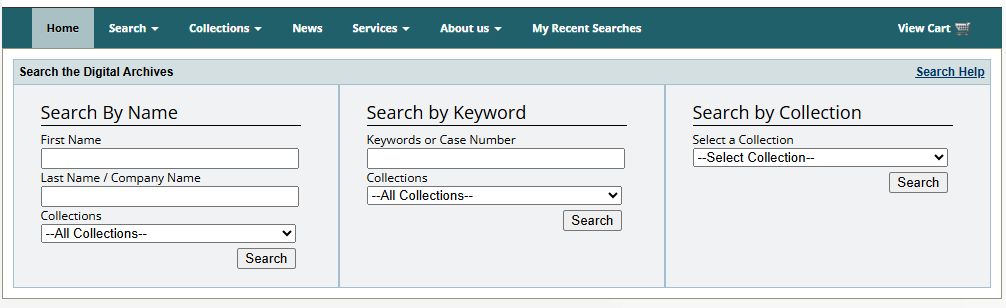
Snohomish County Superior Court records provide public access to case details, filings, and hearing information from the county’s general jurisdiction trial court. These records can be searched online or requested directly from the Snohomish County Court clerk’s office and remain accessible under Washington’s court transparency rules. They include civil cases, felony criminal matters, probate files, and domestic relations cases after 2004. People commonly use these records to check case status, review filings, or confirm hearing dates. The most reliable search method is through the official state archive system, which offers comprehensive access to publicly available court documents maintained by the Superior Court Clerk.
Official Record Search URL: https://www.digitalarchives.wa.gov/
Steps How to Search Snohomish County Superior Court Records
Follow these steps to perform a case information lookup through the official court record system. Make sure you have all relevant details like case number, party names, or filing dates ready. Double-check the information you enter to avoid errors and ensure accurate results.
Open the Official Records Website
- Open your browser.
- Enter the official website URL: https://www.digitalarchives.wa.gov/
- The Washington State Digital Archives search page will load.
Choose the Court Record Category
Once the search page opens, locate the court record category. Common searchable record types include:
- Civil cases
- Adult criminal cases
- Domestic relations cases
- Probate and guardianship files
Enter Case Search Details
Entering a case number normally produces the most accurate result. If the case number is unknown, users can enter a party name or keywords related to the case. The search tool offers multiple ways to locate case records. Users can search using:
- Case number
- Party name
- Keywords
- Filing year or date range
Review Search Results
After clicking the Search button, the system shows matching cases. Users can click “Show All Records” to view the complete list of matching documents. The results page may display:
| Record Detail | Description |
|---|---|
| Case title | Names of involved parties |
| Case type | Civil, criminal, probate, or domestic |
| Filing date | Date the case entered the court system |
| Record series | Category of court document |
| Document availability | Indicates if a digital image exists |
View or Download Court Documents
If a document image exists:
- Click the magnifying glass icon next to the record.
- Wait for the document to process.
- Select View/Download PDF.
Request Full or Certified Copies
Users who need official records can request copies through the Superior Court Clerk’s Office. Typical fees include:
- $0.25 per page for regular copies
- $5 for the first page of certified copies
- $1 per additional page for certification
Jurisdiction and Authority of the Superior Court
The Snohomish County Superior Court serves as the county’s general jurisdiction court, handling a wide range of criminal, civil, and family law matters. It functions as a civil trial court, felony court Snohomish, and also coordinates with the district court for certain cases, serving as a forum for complex family and probate matters, conducting jury trials and issuing binding judgments. As the highest trial-level court locally, it enforces procedural rules, manages trials, and oversees serious legal disputes beyond the limits of lower courts. Its broad authority ensures residents and businesses have access to formal judicial processes under Washington law, guiding where cases should be filed and how proceedings are conducted.
Criminal Jurisdiction
The felony court Snohomish division manages serious criminal matters. This includes felony criminal cases such as robbery, assault, burglary, or other offenses carrying significant prison sentences. The court oversees criminal trials, where judges supervise courtroom procedures and juries evaluate evidence to render a jury verdict. The court ensures that all criminal prosecutions follow proper legal procedures, protecting defendants’ rights while upholding public safety.
The functions include:
- Prosecuting felony charges under Washington criminal law
- Holding pretrial hearings, motions, and arraignments
- Conducting full jury trials for serious offenses
- Issuing court sentencing after convictions
Civil Jurisdiction
As a civil trial court, the Superior Court resolves disputes between individuals, businesses, or organizations. This includes lawsuits, property disputes, and contract disagreements. Cases often involve significant monetary claims or complex civil issues beyond the scope of lower courts. By handling civil litigation, the court provides a structured forum for legal remedies, ensuring fair outcomes under Washington law.
Civil jurisdiction includes:
- Managing lawsuits involving personal injury, property, or contracts
- Settling disputes between plaintiff and defendant parties
- Conducting civil trials, hearings, and motions
- Awarding damages, injunctions, or other remedies
Family Law Jurisdiction
The family division superior court addresses matters that affect family relationships and children. This includes divorce proceedings, custody disputes, and guardianship cases. Judges oversee family court hearings to establish agreements that protect the well-being of minors and families. Through its family law authority, the court ensures that familial conflicts are resolved fairly and in accordance with Washington statutes.
Family law responsibilities include:
- Approving parenting plans for child custody arrangements
- Issuing child support orders and maintenance judgments
- Supervising guardianships and legal conservatorships
- Handling marital dissolution and property division
Types of Cases Heard in Snohomish County Court
The Snohomish County Superior Court handles a wide range of cases, including serious criminal offenses, complex civil disputes, and family or probate matters. As a high-level trial court, it provides a formal legal forum where cases are resolved under Washington law, ensuring protections for all parties and delivering justice effectively. Handling matters beyond the scope of lower courts, the court often oversees jury trials, significant financial claims, and long-term family arrangements, offering residents and businesses a fair and structured legal process.
Felony Criminal Cases
The Superior Court serves as the felony court Snohomish, addressing serious felony offenses like robbery, assault, and major drug crimes. Judges oversee criminal trials, where the jury trial process determines guilt or innocence based on evidence and legal arguments presented by the court prosecutor and defense attorneys.
Aspects of felony cases include:
- Filing of criminal charges by the prosecutor
- Pretrial hearings and motions
- Jury selection and presentation of evidence
- Sentencing for convicted individuals
Civil Lawsuits and Disputes
As a civil trial court, the Superior Court handles a range of disputes between individuals, businesses, and organizations. Cases include personal injury lawsuits, contract litigation, and business disputes. Judges manage proceedings, hear motions, and sometimes preside over jury trials to resolve contested issues. The court ensures that civil litigation follows fair procedures, providing legal remedies for all parties.
Civil matters typically involve:
- Determining liability or responsibility between parties
- Awarding monetary damages or enforcement of contracts
- Settling disputes over property, agreements, or commercial transactions
Family and Probate Matters
The family division and probate sections of the court handle sensitive cases affecting families and estates. This includes divorce proceedings, estate probate, and guardianship petitions. Judges oversee hearings to establish custody, support, and estate administration according to Washington law.
Family and probate responsibilities include:
- Approving parenting plans and child support agreements
- Managing probate cases to distribute estates properly
- Supervising guardianships and conservatorships for minors or incapacitated adults
- Resolving family disputes while prioritizing welfare and legal compliance
Court Divisions Within Snohomish County Court
The Snohomish County Superior Court is divided into criminal, civil, family, and juvenile divisions to manage the county’s diverse legal matters efficiently. Each division has specialized judges and staff to ensure cases are handled fairly and according to Washington state law. This structure supports timely hearings, organized proceedings, and clear guidance for residents, attorneys, and organizations. Knowing these divisions helps individuals navigate the court system, identify the appropriate division for their case, and understand what to expect during the legal process.
Criminal Division
The criminal division focuses on felony trials, serious offenses that carry significant penalties under state law. Judges oversee criminal arraignment, pretrial hearings, jury trials, and sentencing hearings. This division ensures that criminal prosecutions follow legal standards while protecting defendants’ rights.
The functions include:
- Reviewing felony charges filed by the prosecutor
- Managing courtroom procedures for criminal trials
- Conducting jury trials and determining verdicts
- Issuing court sentencing after convictions
Civil Division
The civil division manages civil complaints and disputes between individuals, businesses, or organizations. Judges schedule hearings, supervise trial scheduling, and review case filings. The division ensures that civil litigation proceeds fairly and efficiently within the county superior court system.
Civil division responsibilities include:
- Hearing personal injury claims, contract disputes, and property disagreements
- Conducting bench or jury trials when needed
- Resolving financial disputes and enforcing legal remedies
Family Court Division
The family court division handles matters affecting family relationships, including divorce petitions, custody disputes, and child support issues. Judges supervise family court hearings and establish agreements that protect children and families. This division prioritizes the well-being of minors and the fair resolution of domestic disputes.
Family law duties include:
- Approving parenting plans and custody arrangements
- Issuing child support and maintenance orders
- Overseeing guardianship or domestic relations cases
Juvenile Court Division
The juvenile court division addresses juvenile offenses and focuses on youth rehabilitation rather than solely punitive measures. Judges preside over juvenile detention hearings and coordinate with social services. Through these superior court divisions, Snohomish County ensures that each type of case receives specialized attention, timely processing, and legally sound outcomes.
Primary functions include:
- Managing cases involving delinquent or status-offending youth
- Establishing rehabilitation plans and interventions
- Supervising detention or probation arrangements
- Coordinating with schools, families, and community programs
How Jury Trials Work in Snohomish County Court
Jury trials at Snohomish County Superior Court involve citizens in determining the outcome of certain criminal and civil cases. A jury evaluates evidence and hears testimony, while judges oversee courtroom procedures to ensure fairness. Serving on a jury is a civic responsibility that promotes transparency and accountability in the judicial system. Understanding how these trials operate helps jurors, attorneys, and involved parties prepare for each stage from jury selection to the final verdict—ensuring a balanced and impartial process within the county court.
Jury Selection
The trial begins with jury selection, also called voir dire. Prospective jurors receive a jury summons and report to the courthouse on the assigned date. Judges and attorneys ask questions to identify any biases or conflicts that could affect impartiality. Only those selected serve as jurors for the trial, while others may be dismissed or placed on alternate lists.
Points in jury selection:
- Ensures impartiality and fairness
- Identifies potential conflicts of interest
- Selects a balanced jury panel for the trial
Trial Process
Once the jury is selected, the trial proceeds with courtroom proceedings, including opening statements, witness testimonies, and presentation of evidence. Judges oversee legal procedures, ensuring rules are followed, while jurors focus on evaluating facts and listening carefully to testimonies.
Trial steps include:
- Opening statements by prosecution/plaintiff and defense
- Presentation of evidence and trial testimony from witnesses
- Cross-examinations to challenge or clarify evidence
- Closing arguments summarizing each side’s case
Judge vs. Jury Roles
In a jury trial, the judge ensures the law is applied correctly, rules on objections, and provides instructions on legal standards. The jury evaluates the facts, weighs evidence, and determines whether the party accused is liable or guilty. This separation preserves fairness while combining legal expertise and community judgment. Additionally, jurors are expected to remain impartial, setting aside personal biases, while the judge oversees courtroom procedures to maintain order and integrity. Together, this system upholds the principles of justice and public trust in the legal process.
Verdict Process
After all evidence is presented, jurors deliberate privately to reach a decision. They discuss facts, evaluate credibility, and review testimony. The jury delivers a verdict, which may include: a finding of guilty or not guilty in criminal cases, or a decision in favor of one party in civil cases. Jurors must reach a unanimous or majority decision depending on the type of case, and their verdict is officially read in court.
- Guilty or not guilty for criminal cases
- Liable or not liable for civil cases
- Recommendations for sentencing or awards in certain situations
Courtroom Process for a Typical Court Case
The superior court case process in Snohomish County follows a structured workflow from filing to final resolution, ensuring fairness, transparency, and legal compliance. Cases move through set stages, with judges overseeing proceedings and clerks, attorneys, and parties adhering to procedural rules. Depending on the case type, outcomes may be decided by a jury or directly by the judge. The court manages hearings, timelines, and documentation to maintain order and efficiency. This organized system allows the court to handle a high volume of civil, criminal, and family law cases while safeguarding the rights of all participants.
Case Filing and Initial Hearings
The first stage of a superior court case process involves case filing. Plaintiffs or prosecutors submit necessary legal documentation to the court clerk, officially opening the case. Filing includes forms, complaints, or petitions depending on the matter type, whether civil, criminal, or family law. The court clerk ensures that all submissions meet formal requirements and are properly logged into the court system. This stage sets the foundation for the case’s legal journey.
Initial hearing procedures include:
- Scheduling the first court appearance for parties
- Informing defendants or respondents of charges or claims
- Reviewing temporary orders or emergency relief requests
Pre-Trial Motions and Hearings
Once the case is filed, parties often engage in the pre-trial phase, including legal motions, the discovery process, and settlement conferences. During this stage, attorneys exchange evidence, request clarifications, or challenge procedural matters. Pre-trial hearings streamline the case, clarify disputed issues, and sometimes result in agreements that avoid a full trial.
Pre-trial activities include:
- Filing motions to dismiss or suppress evidence
- Conducting depositions and exchanging documents during discovery
- Attending settlement conferences to explore resolution before trial
Trial and Verdict
If the case proceeds to trial, judges oversee the presentation of court evidence and procedural compliance. In jury cases, jurors evaluate facts, listen to trial testimony, and deliberate to reach a jury decision. In bench trials, the judge acts as both fact-finder and law interpreter, issuing a judicial ruling. The trial concludes with a verdict, judgment, or sentencing. The court then ensures all orders, awards, or penalties are properly documented and enforced, completing the superior court case process.
Trial steps include:
- Opening statements by both sides
- Presentation of evidence and witness testimony
- Cross-examinations and objections
- Closing arguments
- Jury deliberation or judge ruling
Snohomish County Superior Court Calendar and Hearings
The superior court calendar Snohomish provides an organized schedule of court sessions, hearing dates, and judge assignments for cases across criminal, civil, family, and juvenile divisions. It allows attorneys, parties, and the public to track upcoming courtroom schedules and plan accordingly. By maintaining a clear and updated calendar, the court ensures proceedings run smoothly and participants are informed of all scheduled sessions. The daily court schedule lists specific times for hearings, trials, and other court matters. Each entry includes the assigned judge, case type, and location within the courthouse. Hearing notices inform involved parties of court sessions, including pre-trial hearings, motions, and trials.
Court Calendar Features
This calendar helps residents, attorneys, and parties stay informed, organized, and prepared, ensuring transparency and efficiency in court operations. The superior court calendar Snohomish provides:
- Daily court schedule: Displays all hearings and sessions for each courtroom
- Hearing dates: Lists scheduled times for motions, trials, and other proceedings
- Judge assignments: Shows which judge is presiding over each case
- Calendar updates: Reflects rescheduled or continued hearings to maintain accurate information
Snohomish County Court Clerk and Administrative Office
The superior court clerk Snohomish plays a crucial role in managing the administrative functions of the court. This office handles all court filings, maintains official records, and ensures that legal documentation processing follows state laws and court rules. The clerk acts as the primary contact for attorneys, parties, and the public seeking to file documents, request records, or obtain information about cases.
Role of the Clerk
The clerk oversees case management, including the acceptance of complaints, petitions, motions, and other court documents. They ensure that all filings are complete, correctly formatted, and properly logged into the court system. This role supports the smooth operation of courtroom proceedings and helps maintain the integrity of the Snohomish County judicial system.
Filing Services and Records Maintenance
Through these services, the superior court clerk Snohomish ensures that all cases are properly documented and accessible for review by authorized parties. The office acts as a critical hub for records maintenance and legal documentation processing, supporting the efficiency and transparency of court operations. The clerk office services include:
- Accepting and processing civil, criminal, and family law filings
- Maintaining accurate and up-to-date court records
- Issuing certified copies of filings and official documents
- Managing payment of court fees and fines
- Providing guidance on procedural requirements
Location
The Snohomish County Courthouse Superior Court is the main judicial center for the county, handling civil, criminal, family, and juvenile cases. The courthouse is designed to serve the public efficiently while maintaining secure court operations. Visitors can access courtrooms, clerk offices, and administrative services in a single, centralized location. Proper signage, waiting areas, and public entrances make it easier for residents, attorneys, and jurors to navigate the building. Security screening ensures safety for all court participants while maintaining orderly proceedings. Snohomish County Superior Court and Snohomish County Courthouse
Location: 3000 Rockefeller Ave, Everett, WA 98201, USA
- This address is the main location of the county courthouse where the Superior Court sits.
- The Superior Court handles civil, criminal (including jury trials), family law, and probate matters at this site.
- The courthouse provides public entrances, courtroom facilities, and related administrative services.
Court Hours & Access
- Typical office hours: Monday–Friday, 8:30 a.m. – 5:00 p.m. (closed weekends and most holidays).
- Security screening is required at the public entrance before entering courtrooms. (Standard courthouse procedures in Everett.)
Frequently Asked Questions
The Snohomish County Superior Court serves as the county’s highest trial-level court, handling civil, criminal, and family law matters. Many residents, attorneys, and researchers often have questions about court operations, records access, and procedures. This FAQ section answers common inquiries to help users understand how cases are managed, how to attend hearings, and how to access court services. Clear guidance on these topics ensures that parties and the public are prepared when interacting with the court.
What types of cases go to Snohomish County Superior Court?
The Snohomish County Superior Court hears serious cases that are beyond the jurisdiction of lower courts. This includes felony criminal cases, such as robbery, assault, and major drug offenses. It also handles significant civil disputes, including contract issues, property claims, and personal injury lawsuits. Family law matters such as divorce, custody, and guardianship are managed here. Additionally, the court oversees probate cases and other legal matters requiring formal judicial proceedings. Overall, it functions as a general jurisdiction court, capable of hearing the most complex cases in the county.
How do I check a Superior Court case in Snohomish County?
To check a case, you can use the Washington State Digital Archives for online access or contact the Superior Court Clerk’s Office. Online tools allow users to search by case number, party name, or filing date to view basic case information. The public can review hearing dates, motions, and court orders, though some confidential details may be restricted. Visiting the clerk’s office in person allows access to official documents and certified copies. Users should also ensure they follow proper procedures and fees for requesting records. These steps help anyone track the progress of a case efficiently.
Are Superior Court hearings open to the public?
Most hearings in the Snohomish County Superior Court are open to the public, allowing transparency in judicial proceedings. Cases that involve minors, sensitive family matters, or sealed records may be restricted. Visitors entering the courthouse must pass through security screening at the public entrance. Attending hearings provides insight into courtroom procedures and how judges and juries handle cases. Public observers are expected to follow courtroom etiquette, including remaining quiet and not using electronic devices during sessions. This ensures order and maintains the integrity of the proceedings.
Where is the Snohomish County Superior Court located?
The main Snohomish County Superior Court is located at 3000 Rockefeller Ave, Everett, WA 98201, USA. The courthouse houses multiple courtrooms, the clerk’s office, and administrative departments for civil, criminal, family, and juvenile matters. Public access points are clearly marked, and security procedures are in place for visitors. The facility is designed to provide efficient courtroom proceedings and administrative support for attorneys and residents. Nearby parking and public transport options make it accessible to parties attending hearings or submitting filings. This central location ensures that all judicial services are consolidated in one place.
What is the difference between district court and superior court?
District courts handle less serious matters, including misdemeanors, traffic infractions, and small claims up to a specific monetary limit. In contrast, Superior Court deals with more serious criminal charges, larger civil claims, and complex family law cases. It has general jurisdiction, meaning it can hear any case not specifically limited to a lower court. Superior Court also conducts jury trials, while district courts often use bench trials. This distinction helps residents determine the correct court for filing and attending hearings. It ensures that cases are handled efficiently and appropriately based on their complexity.